← Games In development

Michael Sinadjan Games

Balik-Tao

Help them become human again. One of you wants the night to last forever.

A hidden-role card game inspired by the manananggal of Philippine folklore.

Card gameHidden roleFilipino folkloreSolo vs AI Play in browser4–6 seats~15 min
Balik-tao: to become human again.

The story

Who will bring them home before the night ends?

There are nights when someone you love is torn in two. Not by hate, but by an old hunger that splits a person into a winged half that flies and an earth half that waits in the dark.

Tonight it is your mother. Your father. Inang and Amang. You heard the wings before you understood them.

You are Anak-Tao, a child of the house. You do not hunt them. You bring them home. Each of them needs both halves, Hangin the winged and Lupa the earth, put back together before the night is spent.

You are not the only one. Everyone at the table is rebuilding a family from the same scarce Night deck. Friends will help. Friends will also take what they need.

And someone at the table doesn't want the night to end. They smile. They help. They pass you cards. They are the Manananggal: the hunger wearing a neighbour's face.

Bring them home before the Night runs out, or the dark stays.

The families

Four halves. Two reunions. One night.

These are the faces you are fighting to bring home. Hangin is the winged half, Lupa the earth half. Every part fits one place on your tableau, and every part left open can be taken.

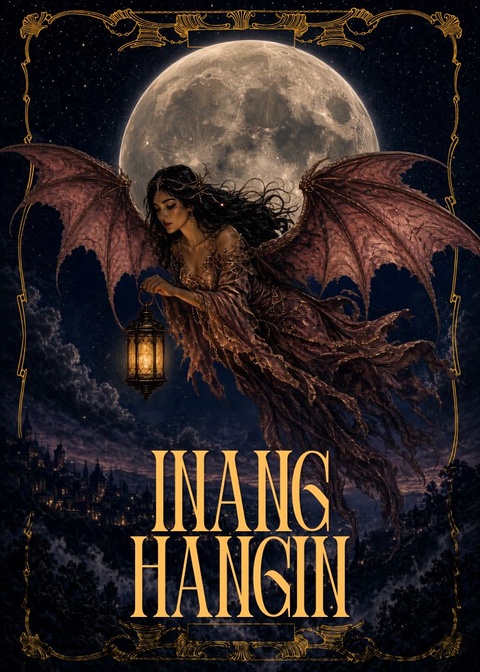
The Inang Hangin card
Inang HanginMother's winged half, still tasting the wind.
The Inang Lupa card
Inang LupaMother's earth half, waiting to be found.
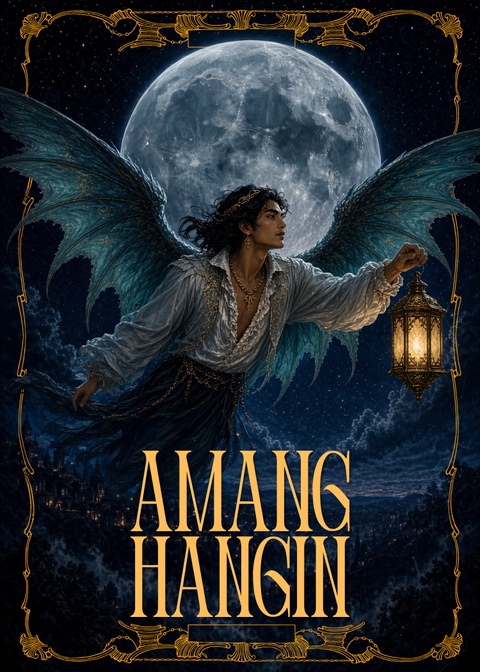
The Amang Hangin card
Amang HanginFather's winged half, circling the moon.
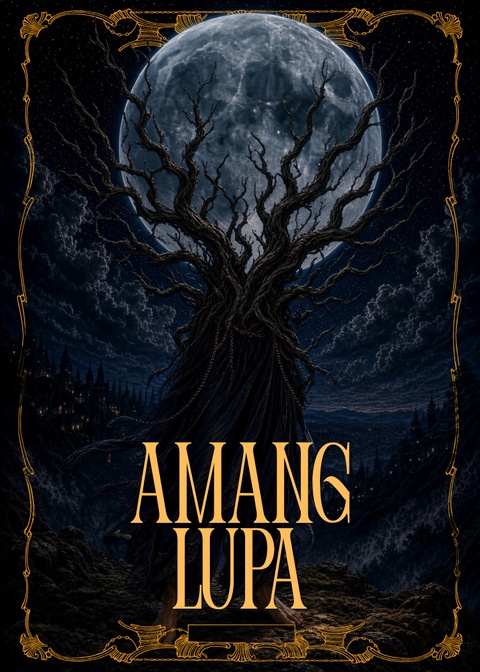
The Amang Lupa card
Amang LupaFather's earth half, rooted in the dark.

The lore

Who are the Manananggal?

The manananggal is one of the best-known creatures of Philippine folklore. Her name comes from tanggal, "to detach": in the old stories she separates her upper body from her lower half, grows wings and flies through the night. She belongs to the wider family of aswang stories, most often linked to the Visayas, told for generations on porches and at bedtime: a reason to come home before dark and stay close to family. A sprinkle of salt, ash or garlic, so the stories say, keeps the two halves from joining again.

Are they real? The Manananggal is very real as culture, alive in komiks, films and the way families talk about the night. Balik-Tao turns that old tale toward hope: the manananggal are your mother and father, and your task is to make them whole again. Balik-tao means "to become human again".

In the game

How it looks and plays

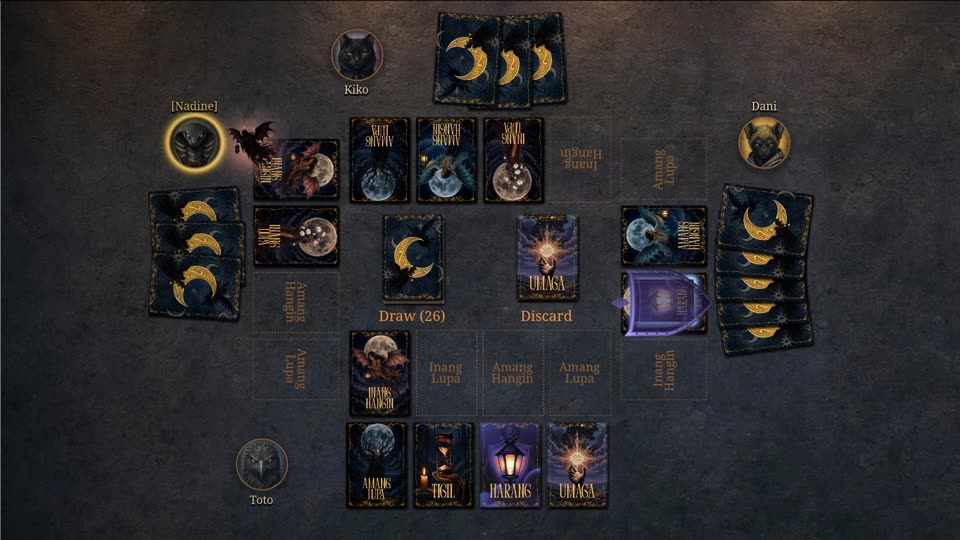
StealAgaw snatches a part straight off someone's tableau and onto yours. They'll notice. They'll remember.
Trust no onePalit trades cards in the dark. Every gift, every steal and every "accident" is a clue, or it's bait.
VoteWhen the Night reshuffles, the table can cast out a suspect. Get it wrong and the Manananggal wins on the spot.
The cards are dealtEvery hand hides a secret. One hides a monster.

Your role

Which one are you?

Tap the card

Draw your role

Your role is dealt face down. Most of the table are Anak-Tao. One of you, or two at six, is not, and nobody knows who until it's too late.

In the gameYour role is dealt the same way: face down, for your eyes only. Nobody else sees it until you go OUT.

Two ways to win

Bring them home, or keep the night

Every seat at the table is playing the same cards. What you are trying to do with them depends on the role you were dealt.

The Anak-Tao role card
Most of the table

Anak-Tao

Rebuild Inang and Amang, Hangin and Lupa, with every other Anak-Tao before the Night is spent. When the last of you is home, the family is whole again.

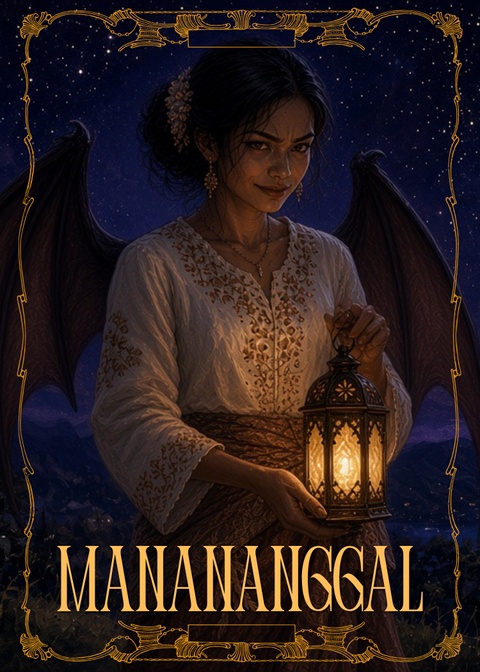
The Manananggal role card
One of you, or two at six

Manananggal

Finish your own Inang and Amang before any Anak-Tao does, and slam the table when you do. Or stall them, quietly, until the Night runs out.

A game of Balik-Tao in play: four players round the table
Playable now

Free demo available on itch.io

Your role is waiting, face down. Play in your browser, or download it for Windows and Linux, and find out who at the table is lying, against computer players for now.

Free, or pay what you want.

The Night deck

Cards that change the table

Effect 1 of 8

Agaw · Snatch

Take a body part from another tableau, straight onto your own.

How to play

A turn in three steps

Each turn has three steps. Draw a card from the Night pile, play as many Effects as you dare, then Place one body part on your tableau. Complete both Inang and Amang and you go OUT: your family is home, and your role is turned face up for everyone to see.

When the Night pile empties it reshuffles, a Muling-Bukad, but only a set number of times. After the last one, the table plays on with what it holds, and a full round with nobody playing or placing anything ends the night.

Features include:

  • Four to six seats: you against three to five computer players
  • Three difficulties, and computer players that only see what you could see
  • An optional vote at every Muling-Bukad
  • The traitor plays the same game you do. Building fast is never evidence; the tell is who you hurt
  • The AI can't cheat. It only sees what you see
  • Illustrated cards and an original score rooted in Filipino folklore

Demo

Demo

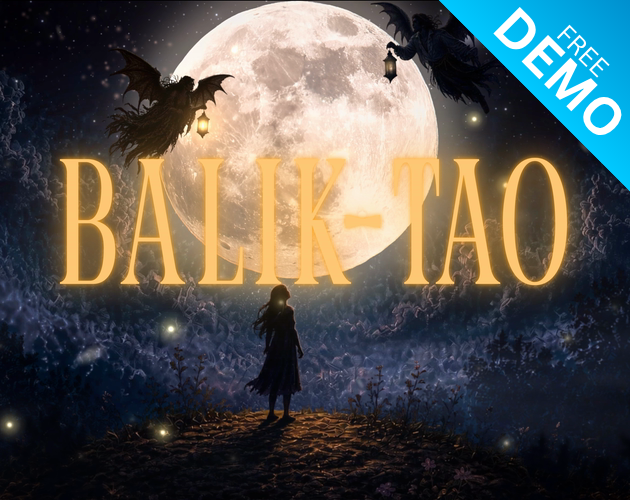
Balik-Tao free demo: the title under the full moon, two manananggal circling and the girl below

The demo is free to play on itch.io, or pay what you want. Play it in your browser, or download it for Windows and Linux.

You get the whole game at a smaller scale:

  • Tables of four, five or six: you against three to five computer players
  • Easy, Normal and Hard computer players
  • All fourteen cards: the two roles, the four halves and the eight Night cards
  • The vote at every Muling-Bukad, which you can turn on or off
  • A choice of one to four Muling-Bukad, for shorter or longer games

In the demo, you'll draw your role, rebuild Inang and Amang, play every Night card and try to work out who the Manananggal is before it's too late.

Here is what we are still building for the full game:

  • Playing with friends: same-room play over local Wi-Fi first, then online games
  • Sounds for every card
  • Steam page coming soon

If you're excited to play, grab the demo on itch.io, and join our Discord to tell us who you caught, or who caught you. We are excited to share the full game with you soon.

Together

How to walk with us

Balik-Tao is made by a small independent studio, and every bit of support helps us finish it.

  1. Join our Discord. That's where we post updates, run playtests and ask what you think.
  2. Play the free demo on itch.io and tell us what you think. Which card would you play first?
  3. Support the project on itch.io: pay what you want. You don't have to pay to play, but whatever you leave goes into building the rest of Balik-Tao.
  4. Share it with someone who loves card games, hidden-role games or Filipino folklore.

Thanks for being here this early.

FAQ

FAQ

Journal

Updates

Studio

Dev Log #1: A Family in Pieces, and a Liar at the Table

Hi everyone, and welcome to the first dev log for Balik-Tao. We've been quiet about this one, mostly because it has changed so much and so quickly. Here's where it came from, what it has become, and what's coming next.

Where it started

Balik-Tao began as a card game you play around a table. The idea was simple: everyone is a child trying to rebuild their parents. In the old stories the manananggal splits in two at night, a winged upper half that flies and a lower half left behind in the dark. So Inang and Amang each come in two halves, Hangin and Lupa, and you need all four to make them whole again. Balik-tao means "to become human again."

Then we added the twist that made the whole thing click: one of the players is secretly the Manananggal.

The traitor does what everyone else does

In most hidden-role games the traitor has something only they do, and their problem is hiding it. We wanted the opposite. The Manananggal plays exactly the same game you do. They rebuild their own family, card for card, in plain sight, and their main way to win is to finish first. Building fast is never evidence of anything. The tell is who you hurt.

So the only clues are in the Night cards: who you steal from with Agaw, who you strip with Tanggal, who you freeze with Tigil. Every one of those cards exists to make you choose a target, and every target says something about you.

Thousands of games before the first real one

Before we built the game properly, we built a quick browser prototype to see if the rules held up. Then we wrote a simulator and let computer players play tens of thousands of games against each other, at four, five and six players, to see who actually wins.

It found real problems. Games could drag on forever at the end, and a Manananggal could sometimes win in ways that felt unfair. So we changed the rules. The Night now only reshuffles a set number of times, and once it's spent, the table plays out what it holds. The Manananggal has to win the race outright: finish after an Anak-Tao is already home, and you hand the game to the Anak-Tao.

Building it for real

The game itself is built in Godot. Right now you play solo against three to five computer players on Easy, Normal or Hard. One rule we hold ourselves to: the AI can't cheat. It only sees what a player at the table would see. It doesn't know who the Manananggal is either, so it watches who attacks whom and makes up its own mind, just like you.

We spent a lot of time making every card feel different. Agaw lashes out like a whip and drags the part home. Palit trades two cards in the dark, so neither of you sees it coming. Tigil freezes a player's clock just short of midnight. When a Manananggal finishes first, they slam the table and knock the other players' cards out of place.

The vote

The newest addition is the vote. Every time the Night reshuffles, the table can cast out someone they suspect. It needs real agreement, and it's a gamble: cast out the Manananggal and the hunger is gone, but cast out an Anak-Tao and the Manananggal wins on the spot. It has made the middle of the game a lot louder.

What's in the demo

  • Four to six seats: you against three to five computer players, on three difficulties
  • All fourteen cards: the two roles, the four halves and the eight Night cards
  • The vote, which you can turn on or off
  • Plays in your browser, or as a download for Windows and Linux

What's next

  • Playing with friends. The rules are built separately from the screens, so the game was designed from the start to be played over a network. Same-room play over local Wi-Fi comes first, then online games.
  • Sounds for every card, not just one
  • Setting up the Steam page, then Early Access in winter 2026

How you can help

If this sounds like your kind of game, the biggest help right now is to join our Discord. That's where we post updates, run playtests and ask what you think. Tell us which card you'd play first, and whether you'd trust the person sitting next to you.

Thanks for being here this early. More soon.