Migo
You. Back home in San Isidro after time away. Migo is the default; you can give him your own name when you start.

The story
You are Migo, back home in Barangay San Isidro. Tatay hands you ten pechay seeds, Nanay has dinner on the table, and every neighbour wants to say hello.
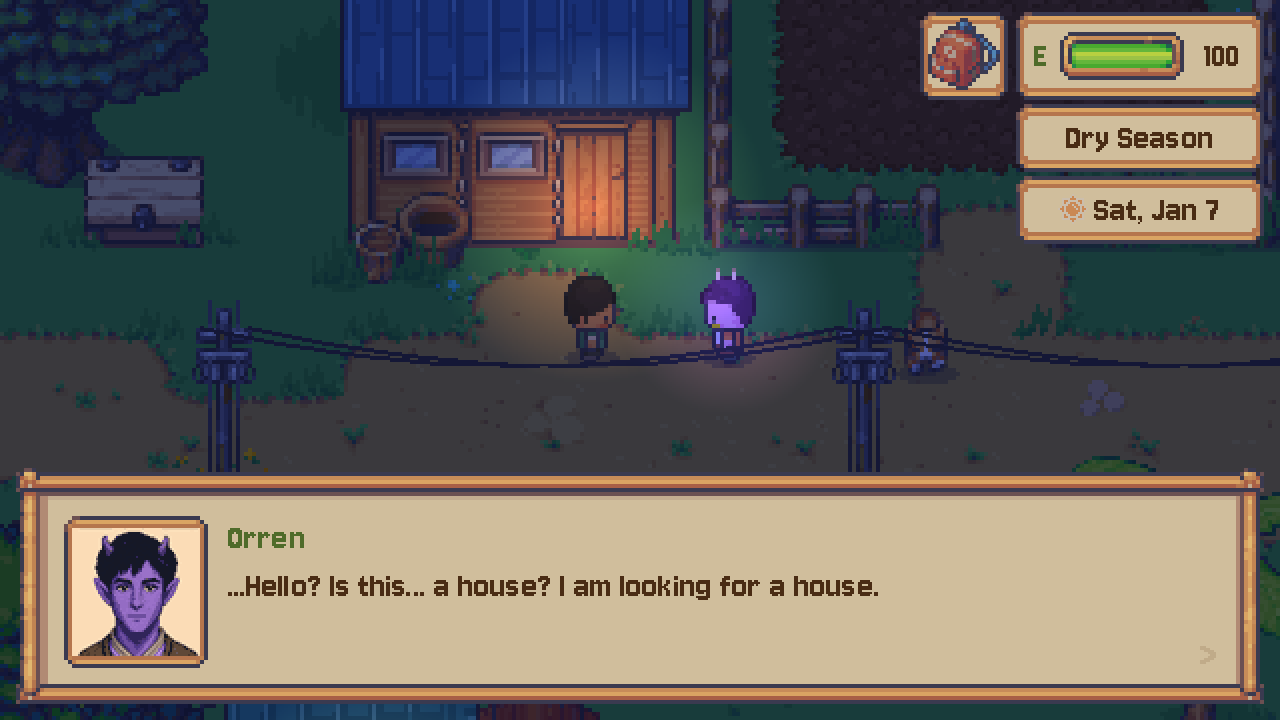
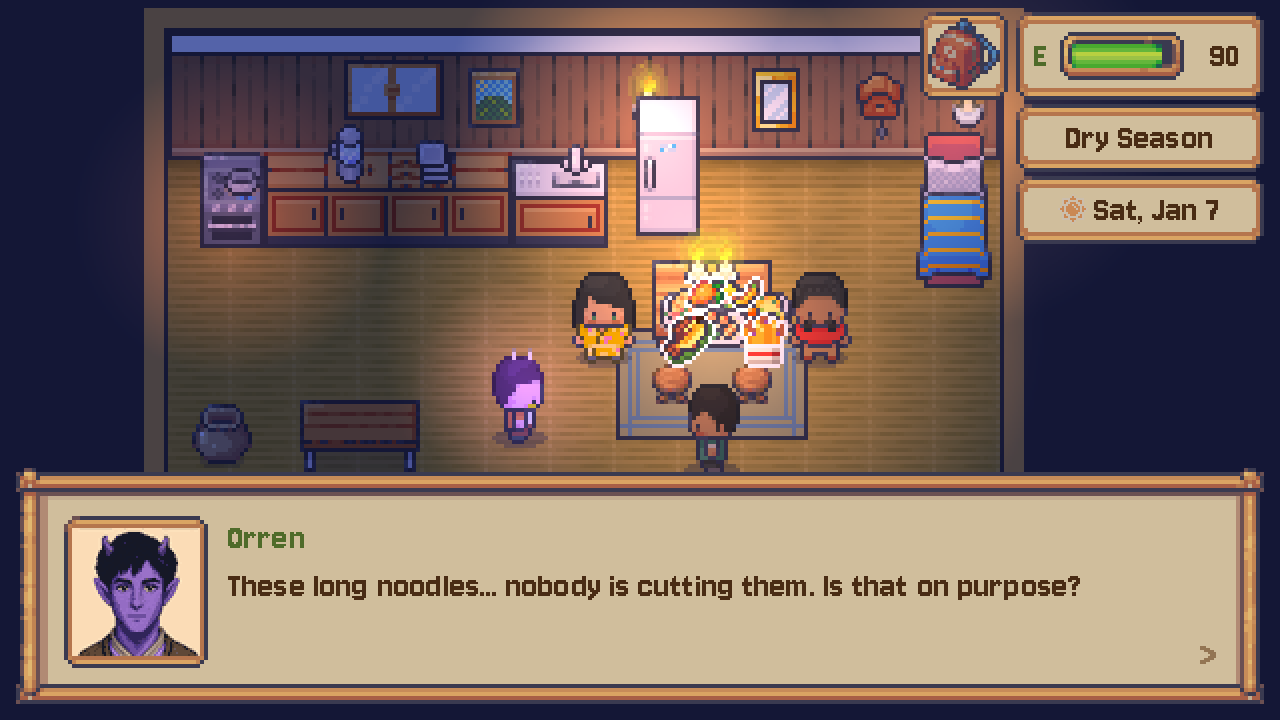
Then, one night, a stranger is standing outside your house. Purple skin. Two small horns. Very polite. He is looking for a house. You bring him in to dinner. "Good evening. Your house smells wonderful. It is a very loud smell." His name is Orren, and he is very far from home.
Tatay asks if he is dangerous. Nanay says he is lost, "just like you, anak, when you came back." And Tatay decides: "Nobody sleeps outside in this house. Not even... visitors."
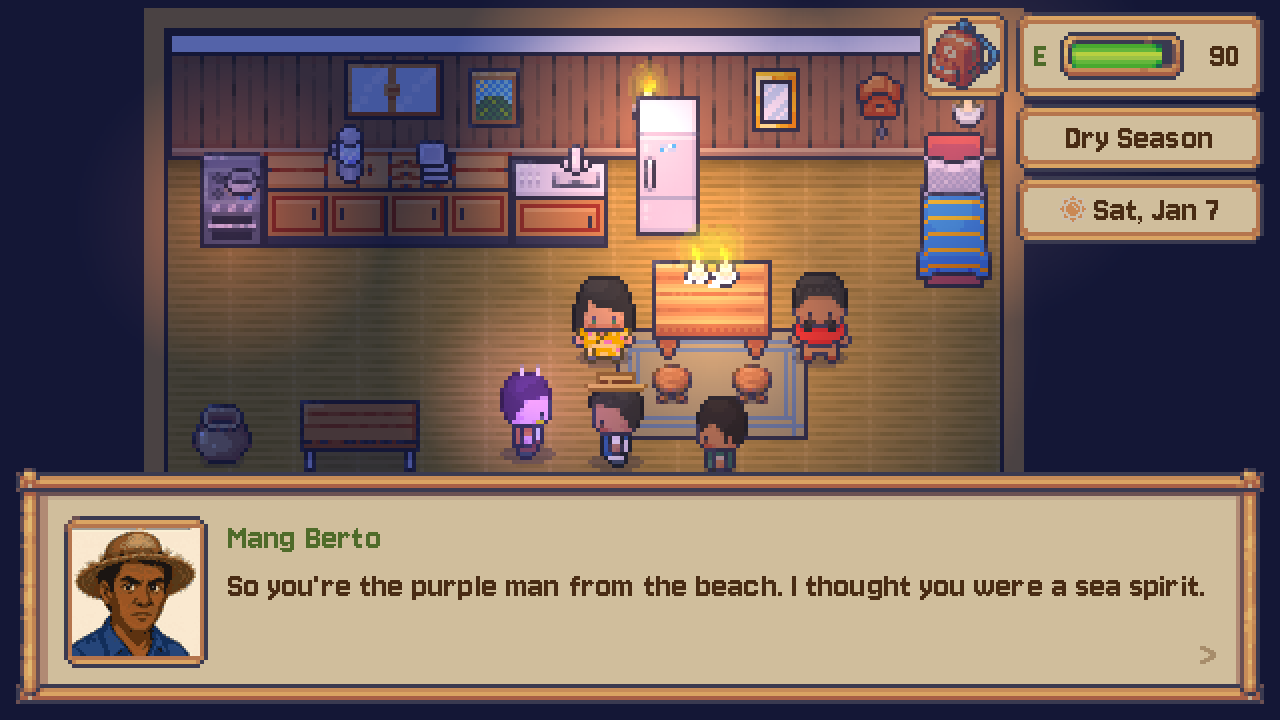
Not everyone is ready. Mang Berto saw a purple man on the beach at dawn, talking to his stones, and by morning the whole barangay has heard about it. You can't argue a rumour away. But you can bring the neighbour who is afraid to meet him, face to face, and you can learn what he can eat and cook it for him, because sharing a meal is how strangers become family.
First Contact is about what a community does when someone different arrives, and the slow, ordinary work of choosing welcome over fear.
Orren won't be the last. When the next one knocks, who will open the door?
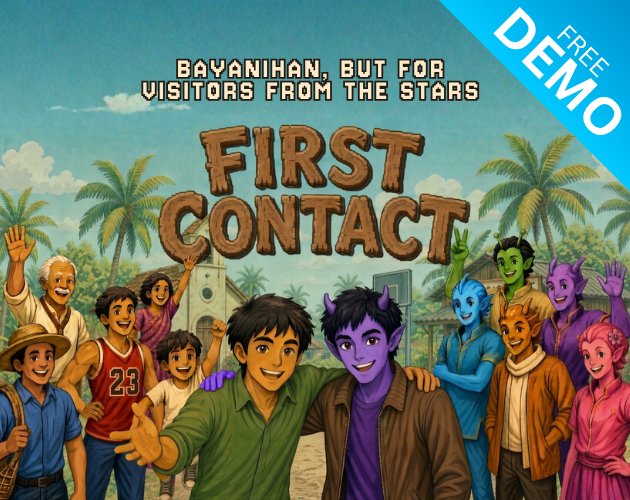
About an hour in San Isidro. Play it in your browser, or download it for Windows. Name your own price, free included.
Play the free demo on itch.ioThe heart of the game
The story moves in five steps. Each one is a real moment in the demo, in the characters' own words.
A rumour reaches every house before Orren does.
NanayMang Berto saw a purple man on the beach at dawn. Picking up stones and shells... and TALKING to them! Now he thinks the sea spirits are angry.
You bring the frightened neighbour to meet him, face to face. Once one trusts him, the next is less afraid.
OrrenYour beach stones are old and patient. They told me the sea was once very full of fish.
Mang Berto...It was. When I was young, you could fill a banca by noon.
A banig to sleep on, a meal he can actually eat, a place at the table.
TatayWell. Nobody sleeps outside in this house. Not even... visitors.
The barangay that whispered about him starts asking what he needs. Every neighbour you bring to meet him moves the whole barangay one step closer to making room for him.
Kapitan TonioA good neighbour who needs a proper room. That, I can do something about.
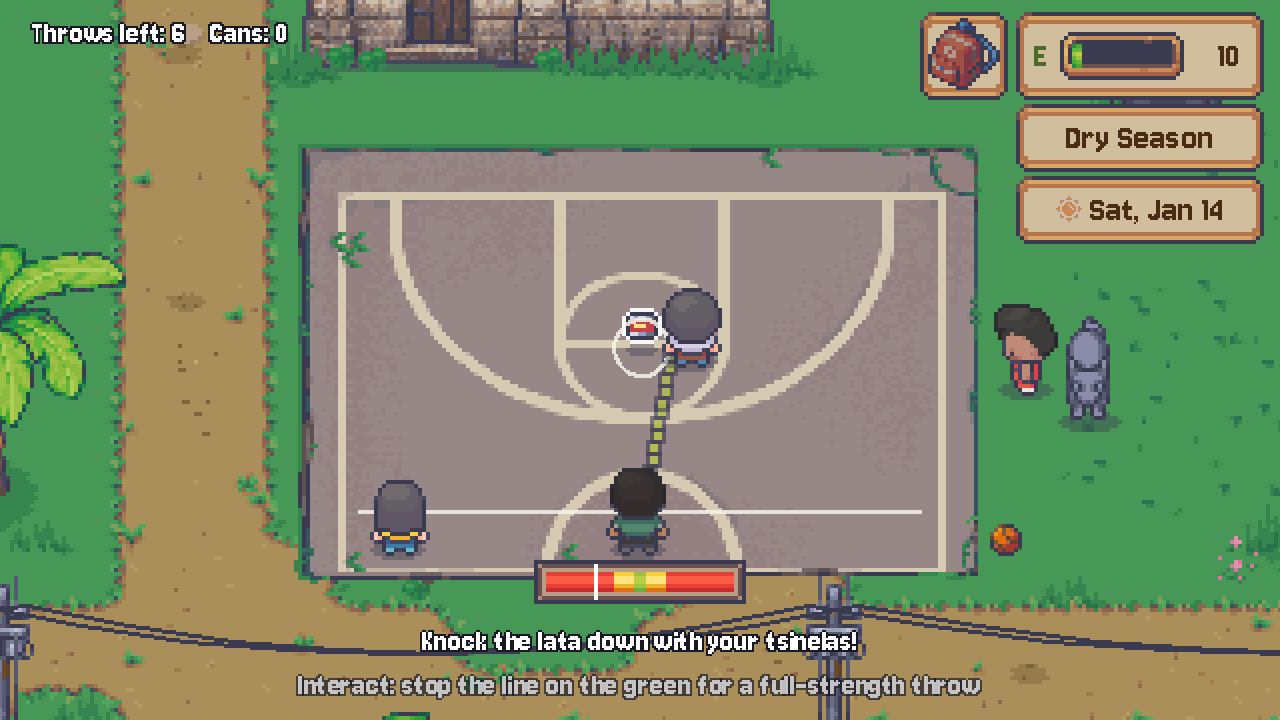
Orren can only eat coconut or starroot, and he politely turns down anything else, every time. You learn by listening. Patience is what the game rewards, even in a game of tumbang preso.
On the courtHim? My kuya says his hands are cold like ice, and he can read your mind.
The people
Every neighbour has a fear, a need, or a favour, and every one of them is a step toward the visitors' new home.
You. Back home in San Isidro after time away. Migo is the default; you can give him your own name when you start.
Migo's mother. Keeps dinner, and the house, open to whoever needs it.
Migo's father. Gives you your first ten pechay seeds and lends you his shovel.
The first visitor from the stars. Talks to stones; has never heard the word kuya.
"Where I come from, every place has a voice. My people listen to a new place through its stones."
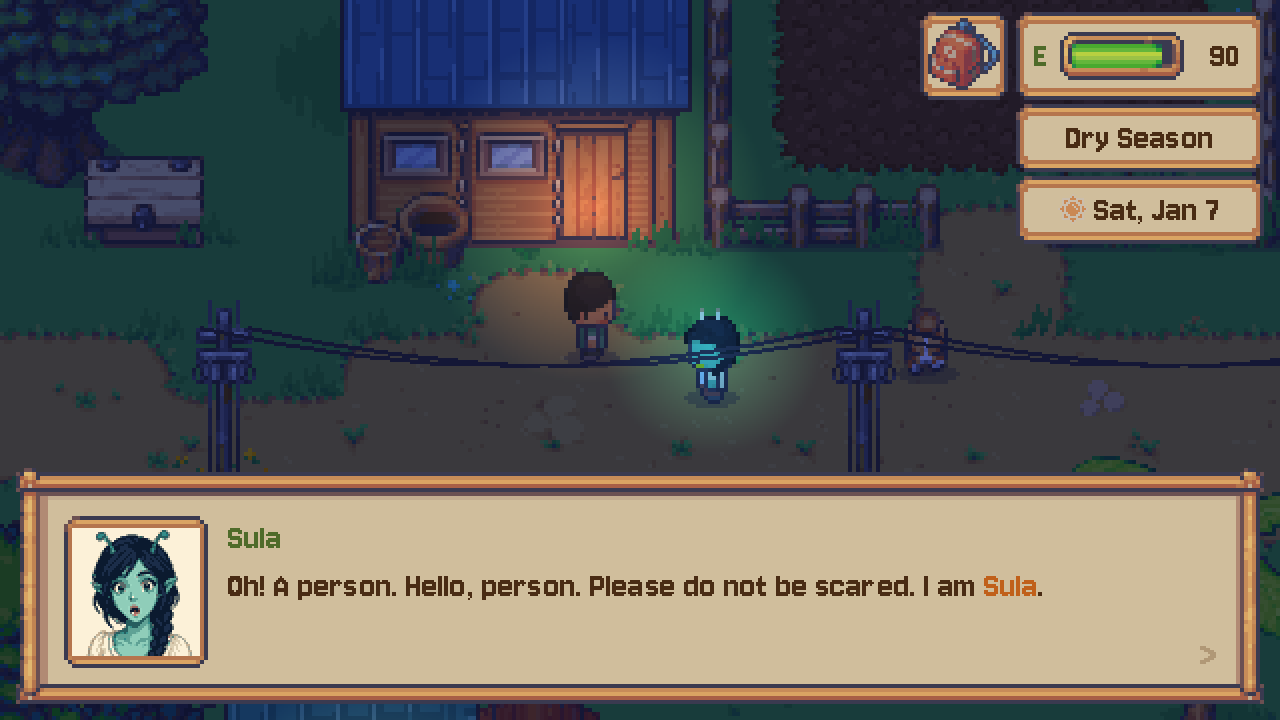
The second visitor. Arrives in a teal glow, hugging a bundle of glowing roots.
"Orren hums off-key across the whole sky. Very easy to follow. I followed."
The fisherman at the end of the pier, and the first to spread the chismis. Lends you a line, then his trust.
Runs the sari-sari store. Her kamote cuttings start your second crop.
Needs a hand clearing a lot of debris. What you dig up there changes the story.
The neighbour who knows the wild plants, and where to find them.
The school teacher. Feed Ka-Bok, the class hen, and she keeps laying.
The parish priest. His stove lesson turns a visitor's food into a family meal.
The barangay captain. When the favours are in, he counts everyone in for the bayanihan.
How it plays
Each day is yours: farm, fish, forage, cook, look after Ka-Bok, buy a cup of taho, and listen to the chismis over dinner. Every chore opens the next step toward helping the visitors belong. There is no combat, no villain and no game over.
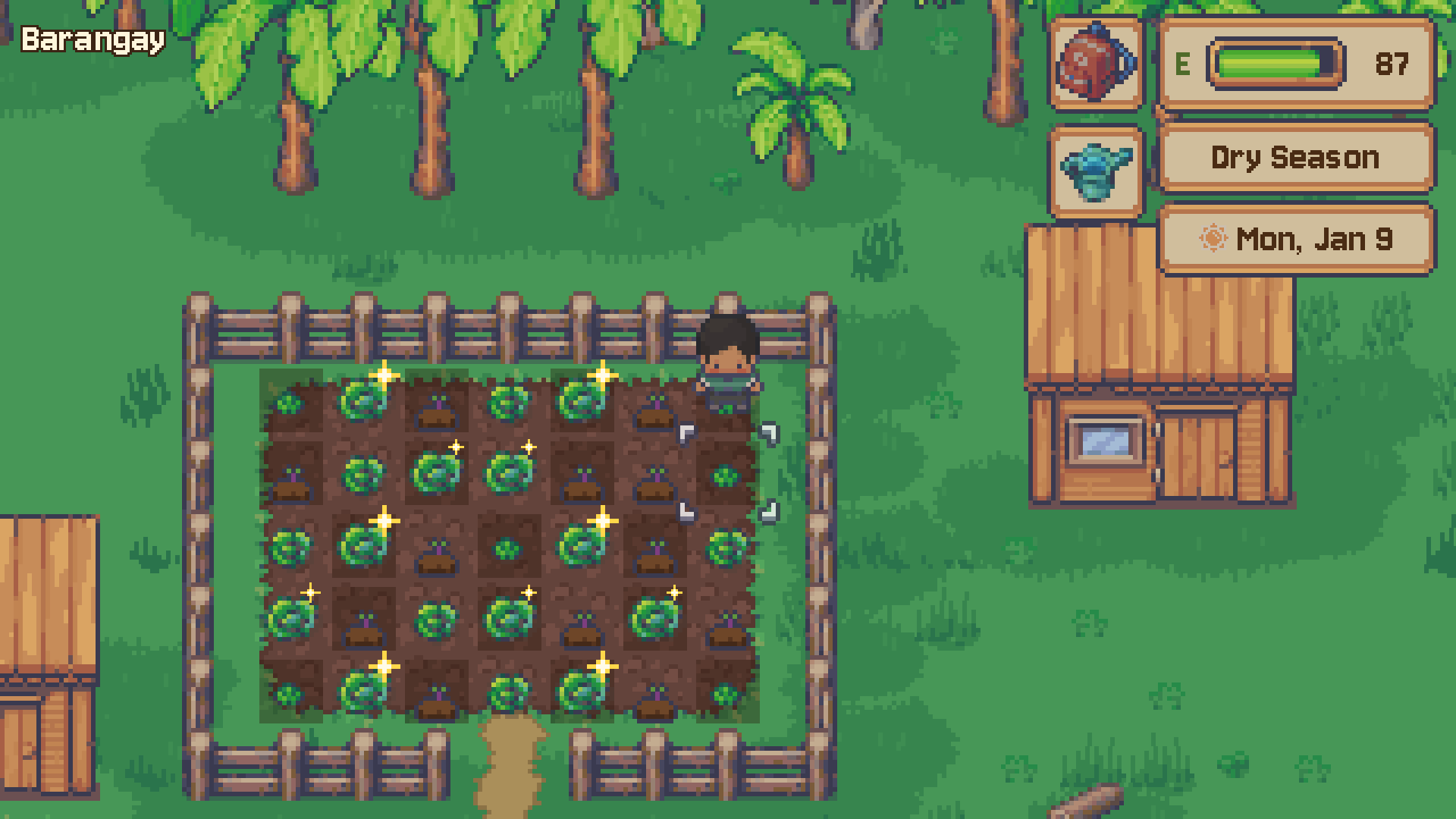
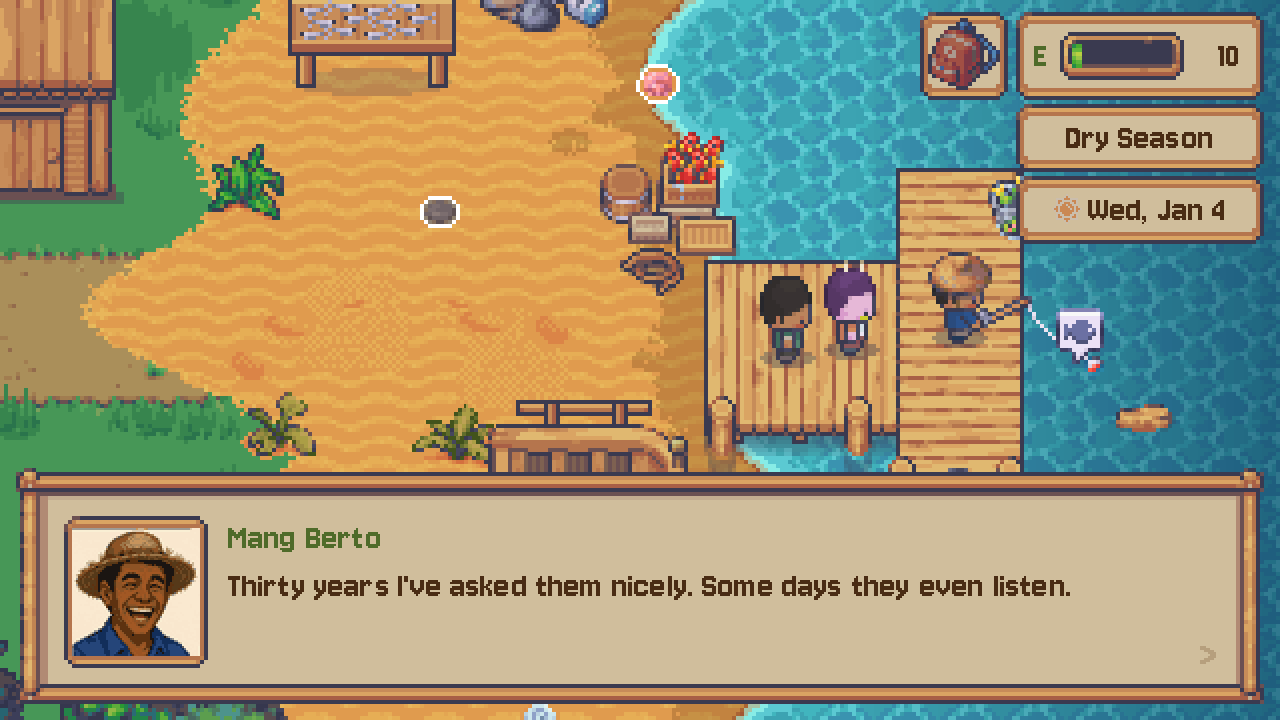
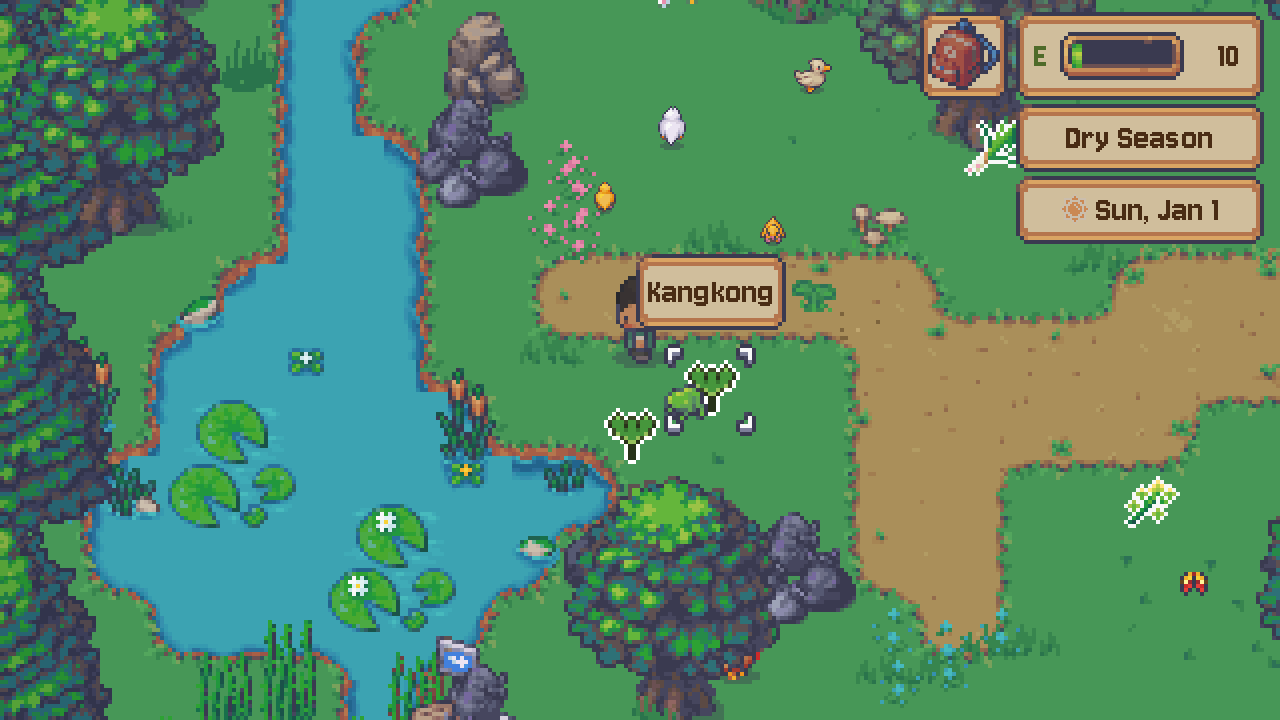
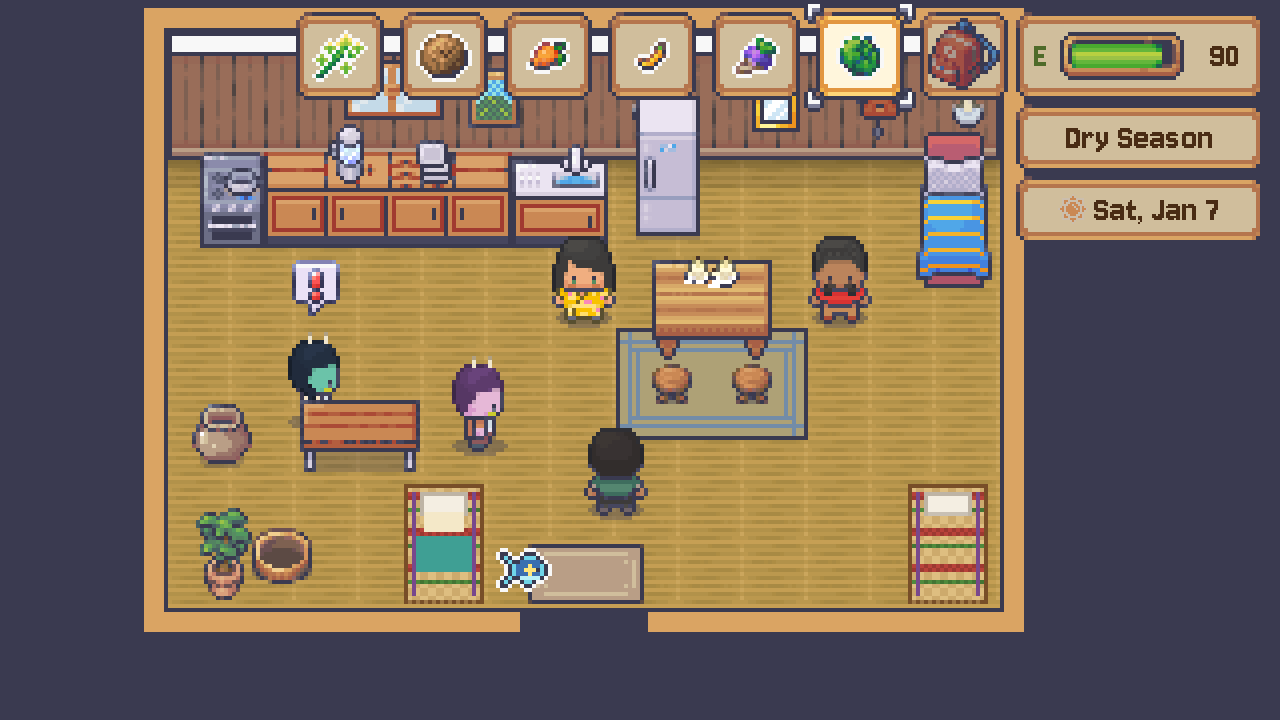
The demo
The free demo follows Migo's homecoming, Orren's arrival and then Sula's, through to the day the whole barangay comes together. After that you can keep playing freely. It takes about 45 to 60 minutes.
Words you'll meet
From the studio
It started with a simple "what if". What if, one day, we learned that we are not alone, and someone from beyond Earth needed a place to stay? Many people would meet that moment with fear. Fear of the unfamiliar is natural, but it is also where prejudice begins.
We wanted to make a gentle rehearsal for a moment like that. Whether or not that day ever comes, the same habits matter every time a stranger arrives in a community: curiosity before judgement, meeting before rumour, a seat at the table instead of a closed door.
We set it in a barangay because that is where welcome really happens: at the dinner table, at the sari-sari store, on the basketball court. Filipino communities, like communities everywhere, can be hard on outsiders. They are also capable of extraordinary hospitality and bayanihan. First Contact imagines the hopeful version: a barangay at its best, where the strangest arrival in living memory is met with a plate of food and a spare banig.
The visitors are made-up aliens, not a stand-in for any real group of people. And nobody in San Isidro is a villain. People are scared, and you give them a reason to come closer.
My team and I write, design and build the game ourselves. The line we work under is simple: Creative work in service of light, even when we start in the dark.
First Contact is our entry for the Checkpoint Game Jam, whose theme is "Play to Prevent". The demo on itch.io is the build we submitted, so it stays as it is while the jam is judged.
We are not a large team. There is no separate writing department, no floor of artists, no publisher calendar. What you play in the demo is what a small studio could finish and put in your hands. It is not on a release schedule, and we won't pretend to know what comes next. If the barangay stays with you, play the demo and stay close: whatever happens, we will share it here first.
Full credits, including the LimeZu art packs, are below.
FAQ
Yes. The demo is name-your-own-price on itch.io, and free is a fine price. If you leave something, it goes back into the studio.
No. There is no combat, no villain and no game over. The only thing you fight is a rumour, and you fight it with dinner. Content note: fear of outsiders, rumour and suspicion, all resolved through welcome. No violence.
No, not for now. It runs in a desktop browser (Chrome, Edge or Firefox) or on Windows, with a keyboard or a controller.
We don't know yet, and we'd rather say so. First Contact started as a game jam entry. The world has room for more visitors, more neighbours and more fiestas, and what you tell us about the demo helps us decide.
If you make art, music or writing, or you love testing games, and you want to help build the rest of this world, write to us through Walk with us or say hello on Discord. Tell us something specific about what you'd make.
Credits
Together
First Contact is a small game from a small studio, and it is just getting started.
Thank you for helping bring Orren home.
Journal
How do you build a Filipino barangay out of art that was made for somewhere else? That was the hardest question of the jam. Here is how we answered it, including the first challenges we ran into.
First Contact is a gentle rehearsal for meeting a stranger (the full story is above). Welcome happens in small places: the dinner table, the sari-sari store, the court. So the world had to feel like a real barangay, not a generic farm town with Filipino names on it.
The base is LimeZu's pixel art: the Modern Farm, Modern Interiors, Modern Exteriors, Modern User Interface and Modern Office packs, which we bought and use under licence. Most of the people start from LimeZu's Character and Farmer Generators. On top of that sits art we made ourselves, and AI-assisted art that we fitted to the packs' grid and palette and checked by eye before it went into the game.
LimeZu's packs are made for a temperate town. A barangay needs things they don't have. Some we drew from scratch: the stone chapel, the Barangay Hall, the school. Others we built from LimeZu pieces and repainted: huts with painted yero roofs, a teal sari-sari store with a red awning. Then the small things, like a pair of tsinelas and a dented lata for tumbang preso. Every one of them had to look as if it came from the same hand as the rest. These are the rules we drew by:
We also had to take things out. The packs grow pines, apple trees and autumn-coloured birches, and none of those grow in San Isidro. We swapped 89 of them for green broadleaf trees and bananas. The animals are local too: askals that nap in the yards, a puspin by the store, maya on the chapel roof, tutubi by day and alitaptap at night.
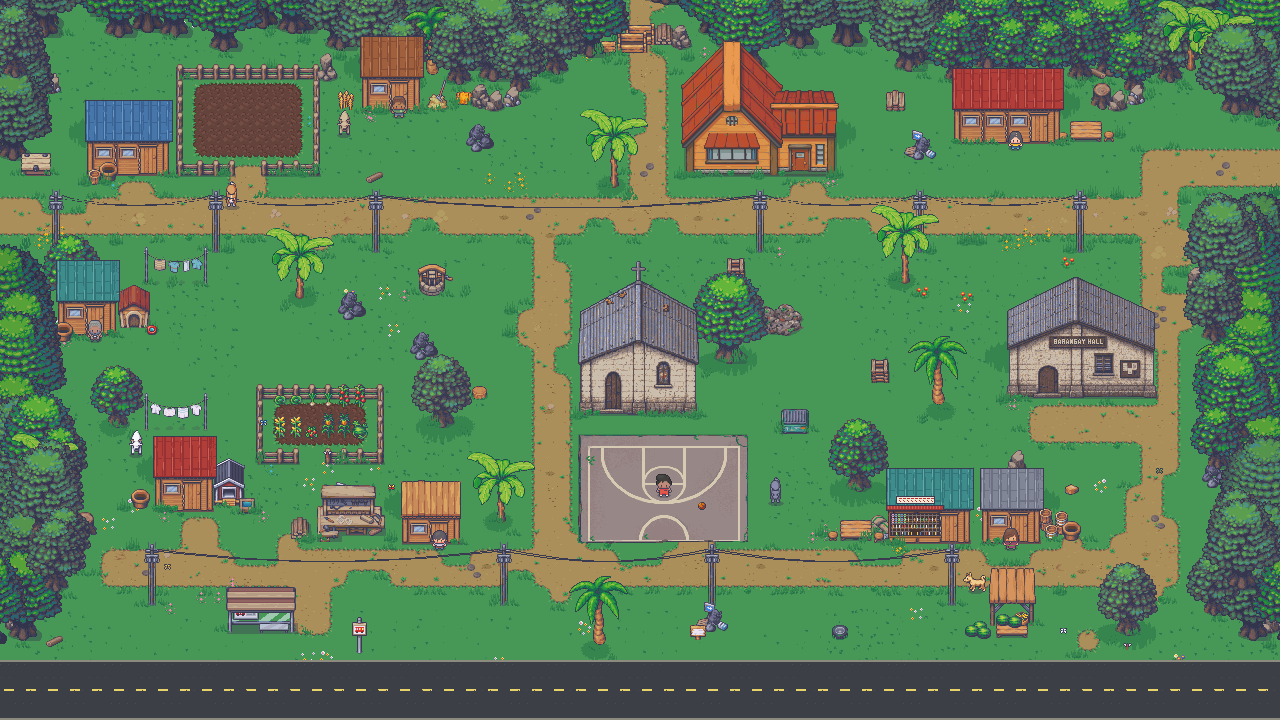
Nobody likes an invisible wall. So every closed edge of the map is a thick treeline that says "not this way" without a word, and every way out is a clear gap where a path runs through. The trees are solid at their feet, so you can't slip halfway into the forest, and when you walk behind one it fades so you never lose Migo.
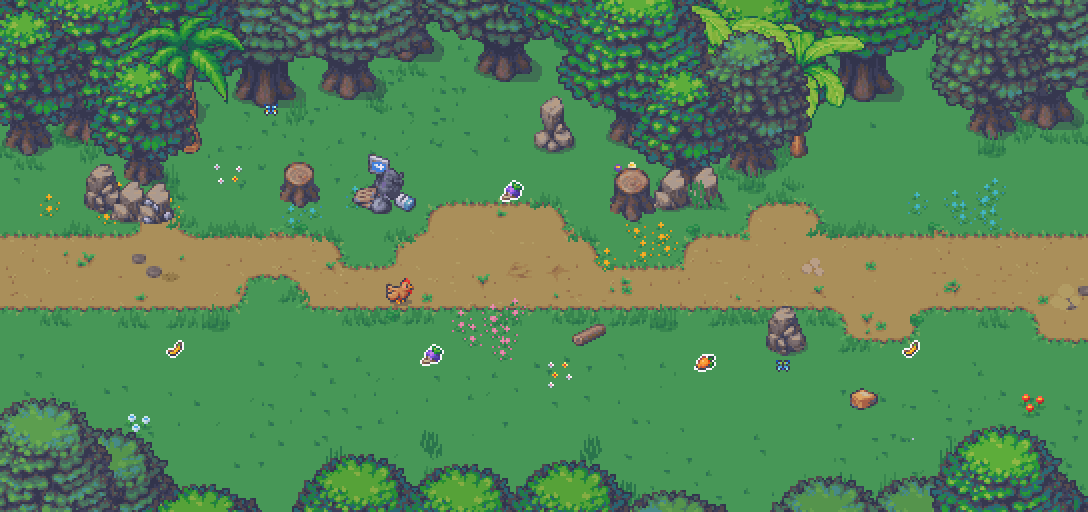
For the forest edges we borrowed from how environment artists plant a forest:
The demo is the build we submitted, so it stays as it is while the jam is judged. Next: what the judges, and you, tell us. Walk the edges yourself, then tell us on Discord which corner of San Isidro you found first.
A purple stranger is standing by your fence, and by morning the whole barangay will be talking about him. Our Checkpoint Game Jam entry is live on itch.io, free to play in your browser or on Windows.
In about an hour you come home to San Isidro, take Orren in on his first night, welcome Sula when she follows his hum across the sky, and find out whether a barangay full of chismis can make room for them both.
The build we submitted is the build you play, so it stays as it is while the jam is judged. Next in this journal: how we built San Isidro, from drawing a Filipino barangay in someone else's pixel style to the treelines that quietly keep you on the map. Until then, play it and tell us on Discord: who did you bring to meet Orren first?